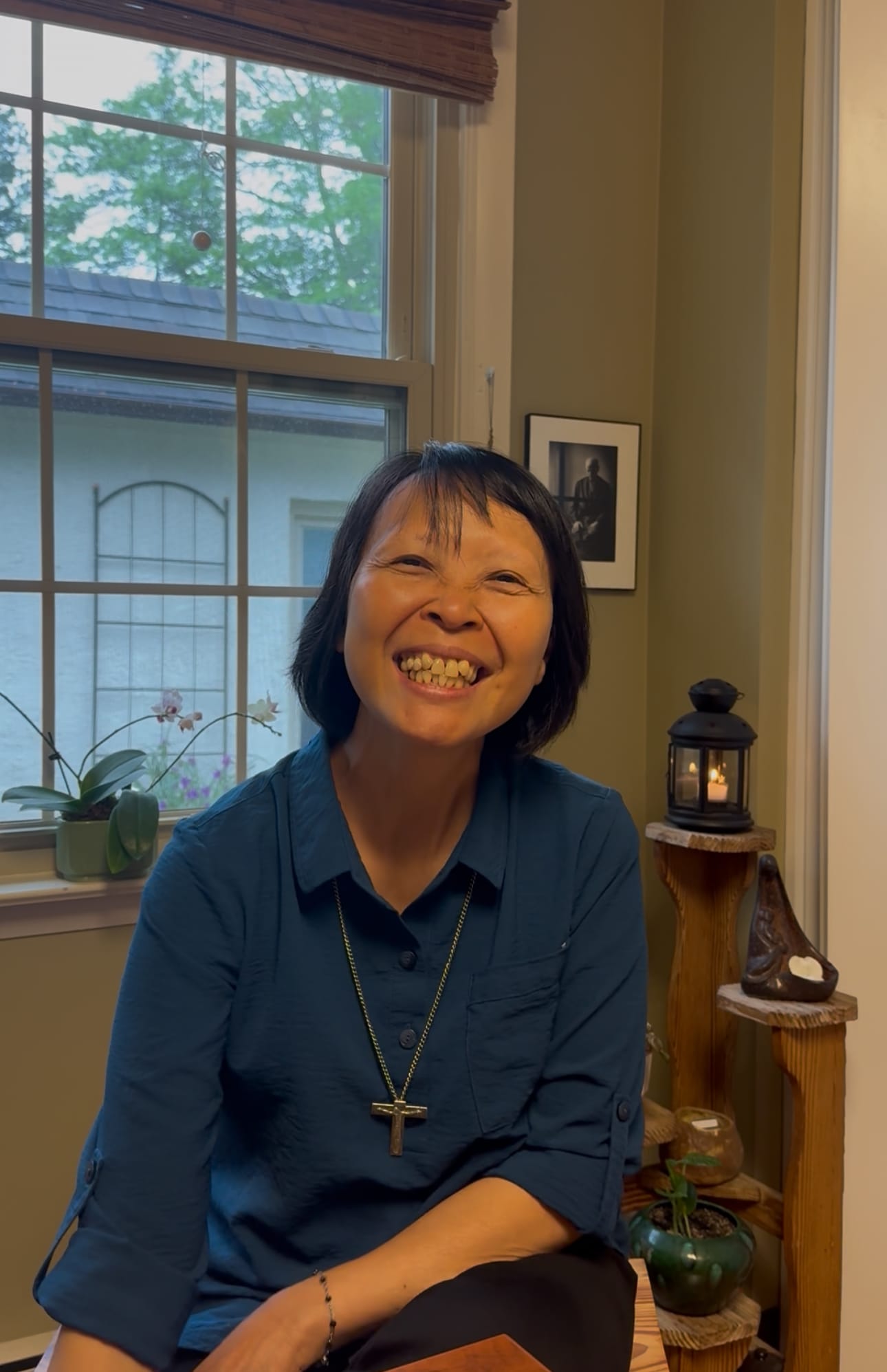
A reflection offered at Taize Prayer on May 14, 2025 at St. Raphaela Center.
by Sister Lyan Tri, aci
Then the two told what had happened on the road, and how they had recognized Jesus in the breaking of the bread.
Lk 24: 35
Salvacion was alone in the corner when I entered her family hut one afternoon, which was located in an area where most people don’t dare to go, especially at night. Since she was a child, she was unable to walk or move herself around. She greeted us in a shaky voice, “Marhay na hapon,” in her native bicolano when we entered. Salvacion lived with her sister’s family, and they all had left for the countryside. She told us that she was hungry and had been left without food or water for a few days. While we waited for the water to boil to make her a cup of coffee, we asked her what she had been doing these days, and she said that she was praying the Our Father… Give us this day our daily bread…I wondered what was going through her mind as she prayed those words. Could someone truly believe that God provides daily bread while their stomach growls with hunger for days? Yet Salvacion’s face lit up with a childlike smile. It was apparent that she was praying with all her heart and being. Even after those lonely, hungry days, a deep joy and trust radiated from her. It touched me deeply. In that moment, I found the God that I so much wanted to believe in. Salvacion shared her faith with me, in a gesture of breaking bread, to nourish me.
This experience with Salvacion, which happened many years ago in the Philippines, is a place that I return to every time I need nourishment in my own journey, as I search for God in our world. It shapes my image of God as a God of Eucharist -one who gathers us all to sit together at the table, where everything before us belongs to all of us, and are invited to share what we have. This space informs and motivates my own action: How can I collaborate in what God is doing, making sure that everyone has a seat at a global, inclusive table, making sure that the bread is shared? How can I promote relationships rooted in true solidarity?
Pope Francis has said:
“Solidarity entails the awareness of being part of a single body, while at the same time involving a capacity on the part of each member to “sympathize with others and with the whole. When one suffers, all suffer. For solidarity is no mere ideal; it is expressed in concrete actions and steps that draw us closer to our neighbors, in whatever situation they find themselves.”
Solidarity, then, is not simply charity or doing good for someone else but a posture that informs our way of looking at each other…to understand who I am, who my sisters and brothers are, and who we are in relationship to each other. The Risen Jesus, present in each one of us, opens our eyes to this reality. It is in the breaking of the bread, when we allow ourselves to sit at one table with each other and be nourished together, that Jesus makes himself known to us in the person at our side as our brother, as our sister.
The early Christian community lived in this way. The author of Acts tells us: “everything…was held in common…There was not a needy person among them, for as many as owned lands or houses sold them and brought the proceeds of what was sold…and it was distributed to each as any had need.” It wasn’t that each one decided what they would give and to whom, but they understood that what they had belonged to everyone because God was the source and united them as one family. Their regular gatherings to break the bread rooted and grounded them in this reality that everyone is my sister and brother, and I have a responsibility to each one as such and they have a responsibility to me. This mentality calls us to mutually share of what we have, making sure that everyone has what they need and that nobody is left out of the common table.
Many might encounter someone like Salvacion and only see a person in need – someone to give to. But if we dare to sit at the table with Salvacion and so many others in our world who are relegated to the corners, our eyes will be opened to see that they are our family, that what I have is theirs and what they have is mine. And we will find that we all have what we need.